


The government could break up a company that builds a superintelligent system; the people who build it could face up to 20 years in prison; and a separate pause on advanced AI would run until a federal AI agency is created and writes safety rules.
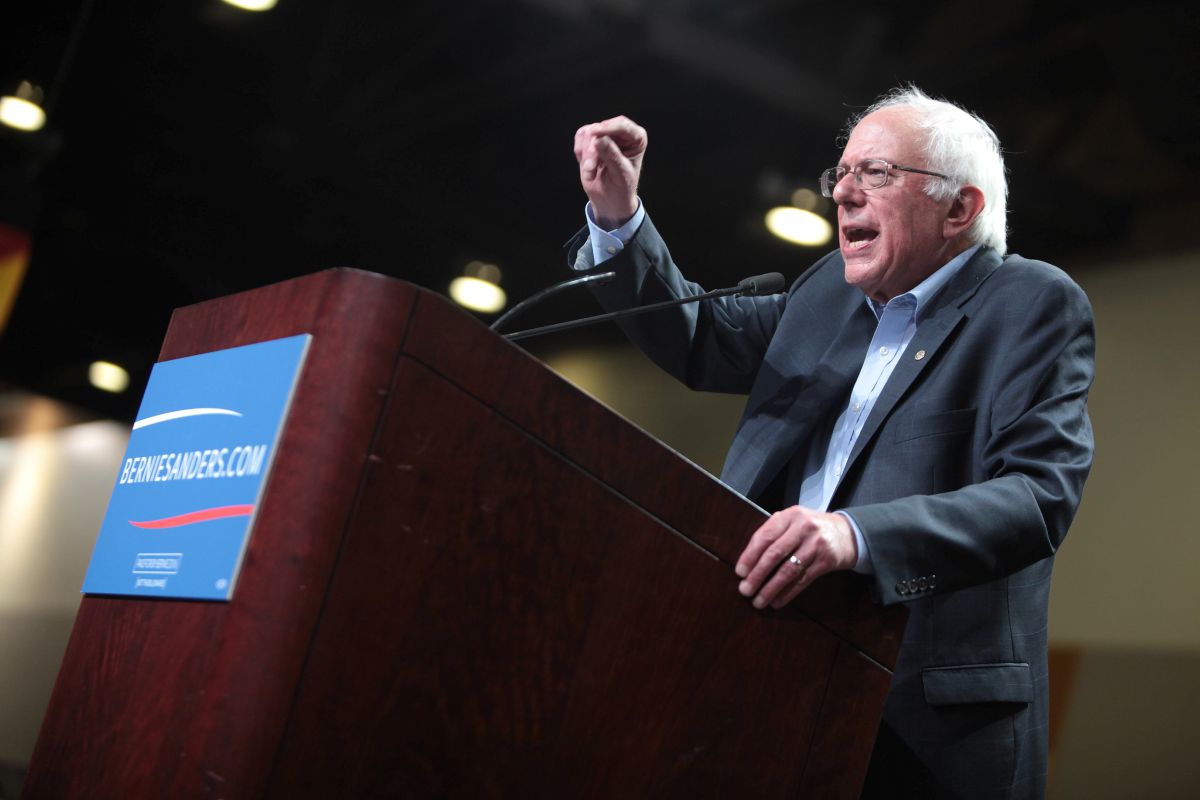
Sen. Bernie Sanders (I-Vt.) and Rep. Greg Casar (D-Texas) introduced the Ban Artificial Superintelligence Act. It would make it a federal crime to build or put into use a system the bill calls artificial superintelligence (ASI), and it would pause development of what the bill calls advanced AI until a new federal AI agency has written safety rules. The summary Sanders released defines the first of those two terms. It does not define the second.
Sanders made the same demand once before without a bill behind it. In August, he wrote to Anthropic, Meta, and OpenAI telling them to halt development themselves. He said the Senate would act if they did not, citing recent incidents at all three companies.
OpenAI, Anthropic, and Meta had each already written their own stopping rules. Meta said it would stop development, OpenAI said it would halt further development, and Anthropic said it would pause building bigger models or delay releasing new ones. Each said it would do so once its own systems became more capable than the protections it had built for them. The release says none of them acted on those commitments.
The ban is aimed at a system nobody has built, yet
The bill would outlaw two things. One is an AI that thinks as well as a person, or better, across a broad range of subjects. The other is an AI that could plan how to take power away from people, which the bill says includes overthrowing the US government. It calls both artificial superintelligence (ASI).
Nobody has built either. OpenAI, Anthropic, and Google DeepMind all say the first one is what they are trying to build, and none of them claim to have built one as yet.
So the ban would apply the moment a company completed an ASI model, and it would never lift. The bill sets no end date and creates no license a company could apply for.
The pause stops work now, and no company can tell if it is covered
The pause stops the work going on today, which is not superintelligent but is heading that way.
The bill halts development of what it calls advanced AI. It does not say what development actions would trigger a pause.
The pause would last until a new federal AI agency exists, has written safety rules, and has set up a way to review systems before release.
The department would rank alongside Defense and the Treasury, with a board of outside experts advising it. It would watch the most powerful systems in use, order dangerous abilities removed, such as a refusal to shut down, and oversee the destruction of anything the ban covers.
Developing artificial superintelligence would be akin to developing nuclear weapons
The government could dissolve a company that builds a banned system, a penalty the sponsors call the corporate death penalty. An individual could face up to 20 years in prison. Sanders’ summary says the sponsors set the penalties to match those for unlawfully developing nuclear weapons.
The bill would also make it official US policy to stop anyone building superintelligence anywhere in the world, through treaties, work with allied governments, and controls on what American companies may export.
Where the bill stands
No committee has taken up the bill, and no Republican has signed on to it.
Congress is weighing several other responses to the same run of incidents. The one closest to the Sanders bill is the AI Kill Switch Act, which Reps. Ted Lieu (D-Calif.) and Nathaniel Moran (R-Texas) introduced in July. That bill prohibits nothing. It lets the Department of Homeland Security order a dangerous system slowed, restricted, suspended, or shut down after a qualifying incident, and it applies only to companies that earn at least $500 million a year and whose systems took more than $100 million in computing to build.
The Sanders bill would stop the systems from being built. The Lieu-Moran bill would let a federal agency act once harm has already occurred, and it has cosponsors in both parties.