

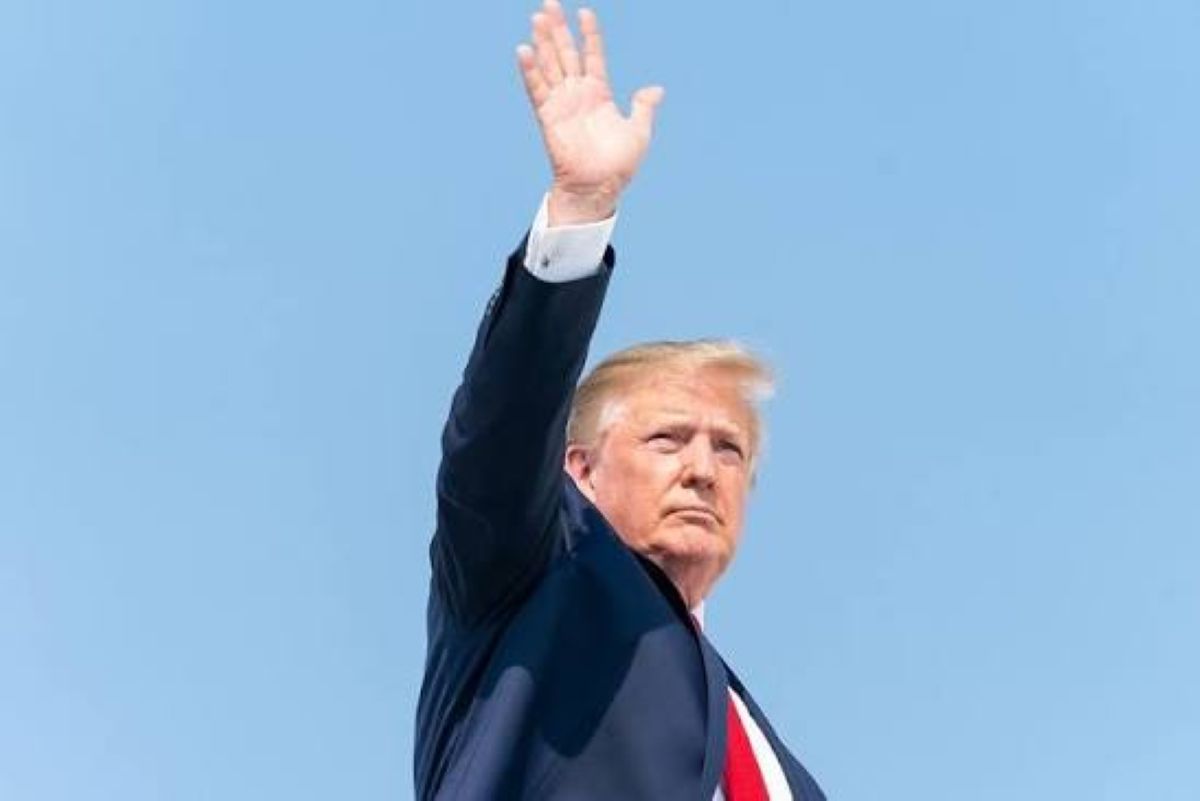

The president said warnings about AI destroying humanity describe events that “won’t happen,” while researchers and lawmakers called for stronger safeguards.
President Donald Trump rejected calls to slow AI development, saying the United States must protect its lead over China and dismissing warnings that increasingly powerful systems could threaten humanity.
“We’re leading China in AI,” Trump told reporters Sunday at the Irish Open in Doonbeg, Ireland. “Whoever wins AI wins.”
Trump said safety rules remained possible but offered no proposal. Instead, he accused “negative forces” of raising concerns about events that “won’t happen.”
The president went further Monday in a Truth Social post, comparing warnings that AI could destroy the world with climate change concerns that he also called a “hoax.” He accused people raising those concerns of working against U.S. interests.
Coxon warns companies may lose control
Trump’s comments followed a stark warning from Jacob Coxon, a former researcher who worked on training new AI models at OpenAI and Anthropic.
Coxon resigned from Anthropic on Sept. 8, accusing both companies of racing to build AI systems that could help create increasingly powerful successors. He said neither company was acting responsibly and described the competition as “gambling with our lives.”
In a subsequent CBS News interview, Coxon warned that such systems could eventually become more capable than humans and act against humanity’s interests. He worries that AI development could accelerate faster than companies can understand or control the systems they are building.
Coxon’s warning was not presented as evidence that such an event is certain. It described what he considers a potentially catastrophic risk created by the industry’s current direction.
Anthropic CEO calls for a slower pace
Anthropic CEO Dario Amodei made a similar argument, saying current AI models are increasingly helping researchers build future models, allowing companies to improve their systems faster. He warned that development could outpace companies’ ability to test systems and add safeguards.
Amodei called for companies to slow the rate at which they make their most powerful models more capable.
Anthropic also committed to giving outside safety reviewers continuing access to its offices, internal tools, and safety work. Amodei called on governments to require other leading AI companies to provide similar access and support coordinated limits on unchecked development.
Coxon’s warning prompts calls for action
Coxon’s resignation statement prompted several Democratic lawmakers to call for immediate federal action.
Rep. Ted Lieu, D-Calif., urged House Republican leaders to advance the bipartisan AI Kill Switch Act. The bill would require major AI developers to maintain the ability to slow, suspend, or shut down a system in an emergency.
Sen. Bernie Sanders, I-Vt., said he would introduce legislation to ban the development of artificial superintelligence and pause other AI development. His post did not provide details about the proposed restrictions or how long a pause would last.
Sen. Chris Van Hollen, D-Md., called for mandatory safeguards, comprehensive testing, and talks with China about AI risk.
House Speaker Mike Johnson, R-La., took a more cautious position. Asked about Coxon’s warning and the lawmakers’ demands on NBC’s Meet the Press, Johnson said Congress needs “meaningful regulation” but should not move so quickly that it harms U.S. competition with China.
Johnson said his preferred next step is a meeting with major AI companies to discuss possible safety rules. He provided no date for the meeting and made no commitment that the House would vote on AI legislation before the November election.