

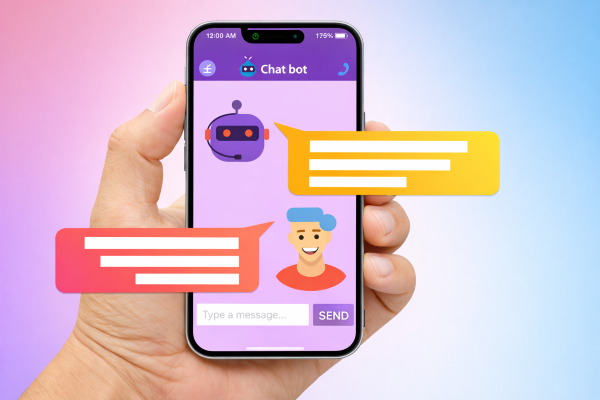
Legislation would require chatbot providers to verify user ages, obtain parental consent for minors, and monitor interactions for self-harm risks.
Representative Michael Lawler (R-N.Y.) introduced legislation that would require companies operating certain AI chatbots to verify users’ ages and implement protections for minors.
The measure, titled the Children Harmed by AI Technology Act, or CHAT Act, was introduced in the House of Representatives and referred to the House Committee on Energy and Commerce..
The legislation would apply to operators of “companion AI chatbots,” defined as software systems designed primarily to simulate emotional interaction, companionship, or therapeutic communication with users. Customer service chatbots, internal research tools, and limited-function game bots would be excluded.
Under the proposal, companies offering these chatbots would be required to create user accounts and verify the age of individuals accessing the systems using commercially available verification methods. Existing user accounts would be frozen until age verification is completed.
If a user is identified as under 18, the provider would be required to link the account to a verified parental account and obtain verifiable parental consent before the minor could continue using the chatbot. The bill would also prohibit minors from accessing companion chatbots that generate sexually explicit communication.
The legislation would require chatbot providers to monitor conversations for signs of suicidal ideation. If such content is detected, the system would need to provide the user and the associated parental account with resources such as contact information for the National Suicide Prevention Lifeline.
Companies would also be required to notify users that they are interacting with an artificial system. The bill specifies that a visible notification must appear at the start of an interaction and at least every 60 minutes during continued use.
The Federal Trade Commission (FTC) would enforce the law. The agency would be required to issue compliance guidance within 180 days of enactment to assist companies in meeting the requirements.
Violations of the proposed law could be treated as deceptive acts or practices under federal consumer protection statutes.