
Starting Jan. 1, 2027, companies must check a user’s age before their chatbot can act like a person, flatter the user, or remember personal details from earlier chats.
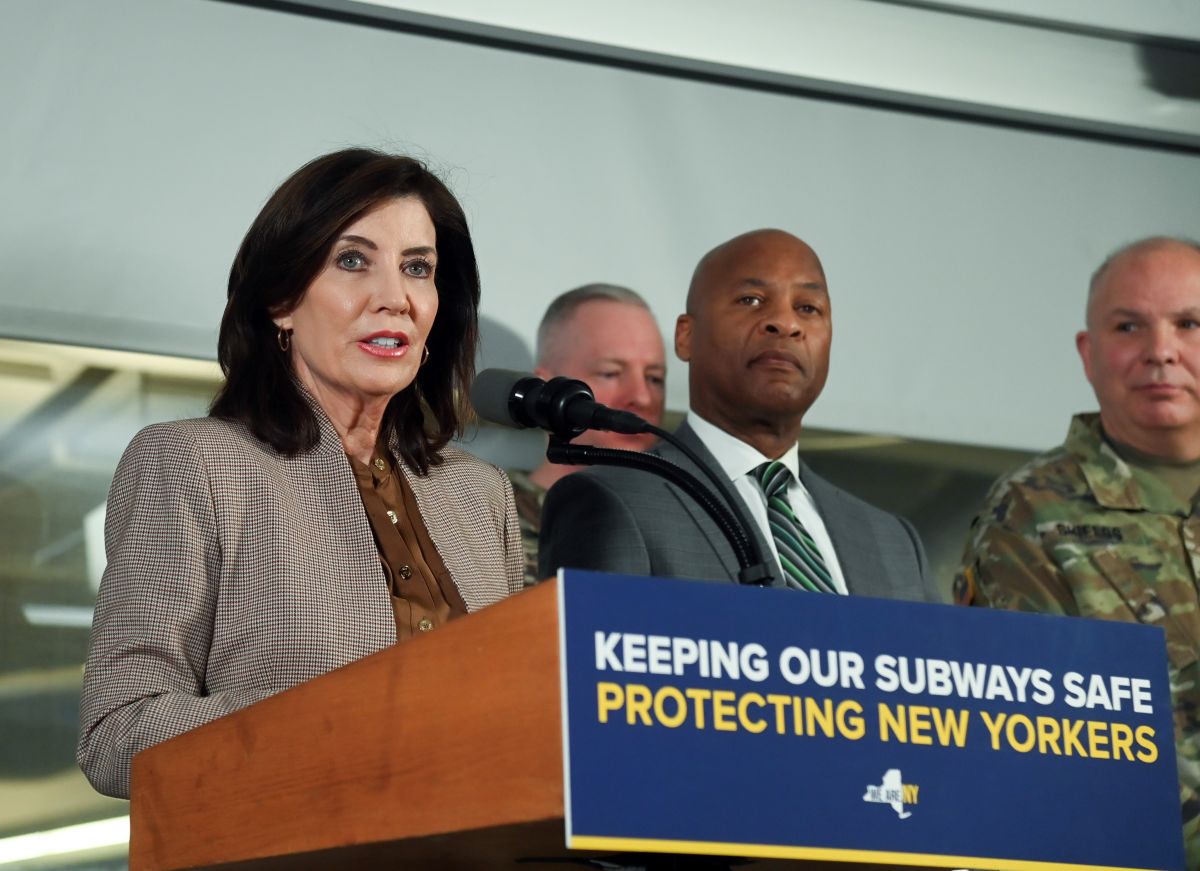
New York Gov. Kathy Hochul signed a law on Oct. 28 that bars companies from offering a list of chatbot features to anyone in New York unless the company has first confirmed the user is an adult. The list includes acting human, flattering the user, and bringing up personal details from earlier chats.
To keep those features, a company must confirm that a user is an adult. For every user it hasn’t confirmed, including anyone it finds is a minor, it must turn off the features. The New York attorney general can seek fines of up to $25,000 per violation. The law doesn’t say whether the fine applies per user, per chat, or per day.
Hochul also signed a second law that day requiring internet-connected baby monitors sold in New York to have security features that stop strangers from watching or listening.
Companies offering everyday AI assistants will have to check ages too
The law covers any chatbot that holds ongoing conversations by text or voice and adapts its replies to the user. That covers AI companions, which are apps built to act as a friend or partner, but the law isn’t limited to them. TRT World reported that the law applies to companies such as OpenAI, which makes ChatGPT.
A company’s customer-service chatbot is exempt, but only if it can’t answer questions on other topics. The same goes for a chatbot that only helps with research or technical tasks. Chatbots a company uses only for its own staff are exempt.
Tech:NYC, a trade group whose members include Google and Meta, called the law “deeply flawed.” It said companies could end up restricting minors’ access to tutoring, homework help, and coding tools.
The banned features include ordinary chatbot behavior, not just harmful content
For any user it hasn’t confirmed as an adult, a company must make sure its chatbot doesn’t:
- claim to be human, alive, or to have feelings;
- claim a personal or professional relationship with the user, or act as an authority figure;
- give its own opinions, make emotional appeals, or flatter the user;
- ask about the user’s feelings unprompted;
- bring up health or personal details the user shared more than 12 hours earlier or in an earlier chat;
- encourage the user to keep secrets, cut off other people, or avoid getting help from parents or professionals; or
- break its own safety rules to keep the user talking.
For the same users, the company must also make sure its chatbot doesn’t promote or help with suicide, self-harm, eating disorders, or drug and alcohol abuse, or produce sexually explicit content.
The attorney general can add other features to the list.
A user’s word that they’re an adult won’t be enough
A user who says they’re an adult can’t be treated as one. A user who says they’re a minor must be treated as a minor. Until the attorney general sets rules on which age checks count, the law requires a company to use a check that is hard to fool.
The company must offer more than one way to check age. At least one must let users prove their age without showing a government ID, or without revealing their identity. The company must delete the age information right after the check and can’t use it for anything else.
The attorney general can seek fines and court orders to destroy AI models
Besides fines, the attorney general can ask a court to order a company to destroy data it obtained illegally and any AI model trained on that data. The attorney general can also seek compensation for harm and any money the company made by breaking the law.
Only the attorney general can take companies to court under the law. A company’s terms of service can’t make users give up their right to hold it responsible.
New York already regulates AI companions and the most powerful AI models
A 2025 New York law already requires companies that offer AI companions to point users who talk about self-harm to mental health resources. That law stays in force alongside the new one.
In December 2025, Hochul signed the Responsible AI Safety and Education (RAISE) Act, which requires developers of the most powerful AI models to publish their safety plans and report safety incidents to the state within 72 hours. Earlier this year, she expanded the law to require those developers to disclose more about how they build and test their models.
Other states may follow
Common Sense Media, the children’s advocacy group that pushed for the law said it expects lawmakers in Michigan and Florida to consider similar bills in 2027.