

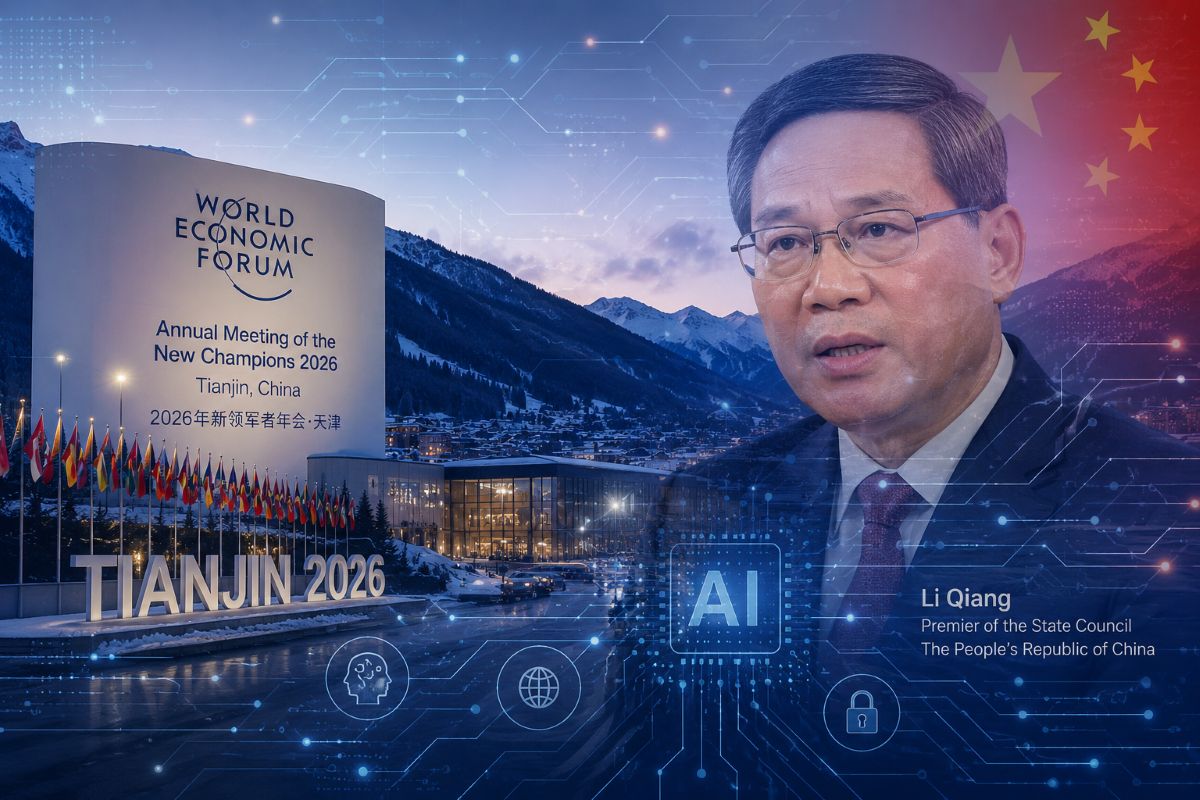

Chinese Premier Li Qiang said international cooperation is needed to manage the rapid development of AI, warning that the technology could outpace human oversight if countries fail to establish effective global governance.
Chinese Premier Li Qiang warned that the world risks losing control of artificial intelligence without stronger international governance and urged countries to work together on global rules for the technology.
Speaking Wednesday at the opening ceremony of the World Economic Forum’s Annual Meeting of the New Champions in Tianjin, often called “Summer Davos,” Li said AI is advancing rapidly while global governance mechanisms have yet to keep pace.
“How to find a balance between development and security urgently requires further consensus from the entire society,” Li said, according to an official transcript released by China’s Ministry of Foreign Affairs.
Li said AI has become “a new engine for growth” but warned that if risks are not properly managed, “the world may lose control over AI.”
He called for countries to strengthen coordination on AI governance, saying fragmented approaches could hinder innovation while leaving important risks unaddressed. Li said governance should promote both technological development and safety, while ensuring AI remains broadly accessible rather than concentrated among a small number of countries or companies.
According to the official Chinese government transcript, China supports greater international cooperation on AI and is willing to share its technologies and development experience with other countries, particularly developing economies. Li also called for a governance framework based on broad international consensus and respect for the different regulatory approaches adopted by individual nations.
Li’s speech reiterated China’s position that AI governance should be developed through multilateral cooperation rather than by individual countries acting alone. He said all nations should have the opportunity to participate in shaping global AI rules as the technology becomes increasingly integrated into economies and societies.
The World Economic Forum meeting in Tianjin continues through June 26, bringing together government officials, business leaders, and academics to discuss global economic and technology issues.