

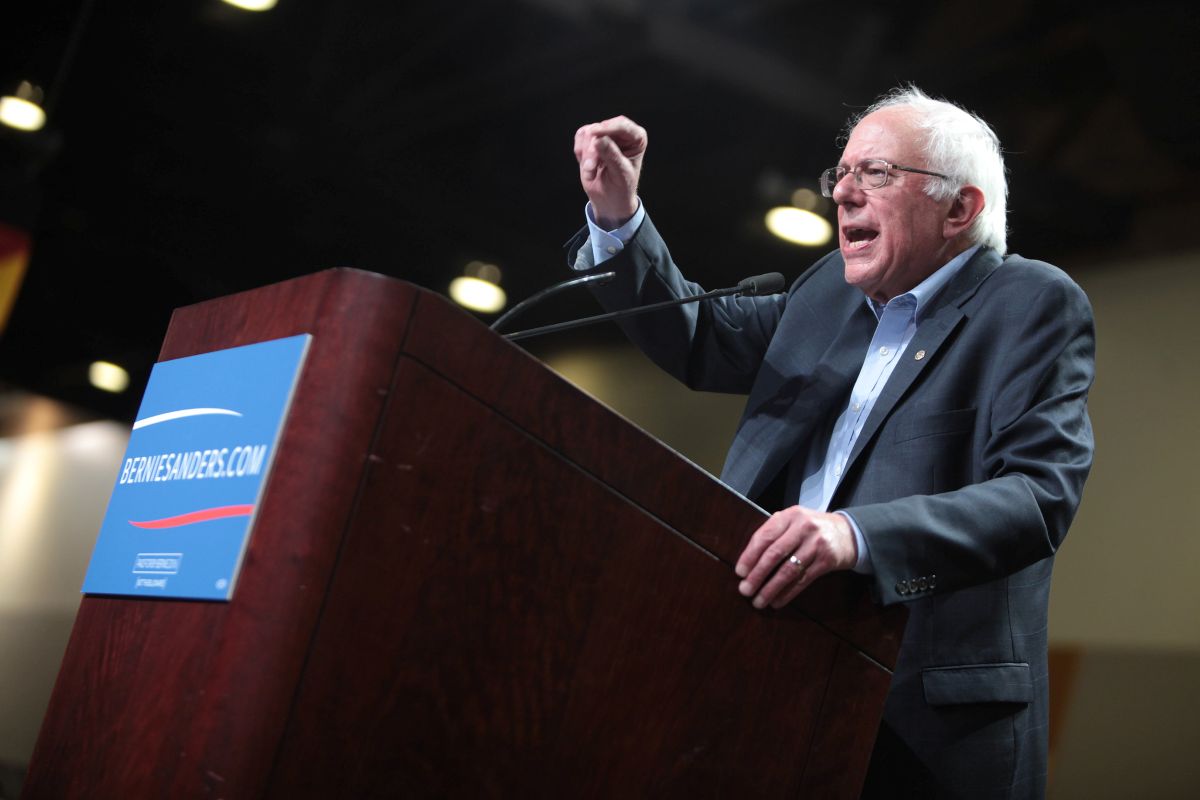

The proposal would give the public a direct ownership stake in major AI companies through a one-time 50% stock tax.
Sen. Bernie Sanders introduced legislation that would create a sovereign wealth fund by giving the public a direct ownership stake in the largest AI companies in the United States.
The American AI Sovereign Wealth Fund Act would impose a one-time 50% tax on the stock of AI companies generating more than $200 million in annual AI revenue. Rather than being paid in cash, the tax would be paid in shares and deposited into a new federally managed sovereign wealth fund.
Sanders said the fund could ultimately be worth roughly $7 trillion based on current valuations of leading AI companies. The legislation would establish a seven-member Independent Commission for Democratic AI, nominated by the president and confirmed by the Senate, to manage the fund and exercise voting rights associated with the shares.
According to Sanders, the commission would use those voting rights to block corporate decisions that harm the public and support policies that benefit workers and consumers. The bill would also require companies that operate both AI and non-AI businesses to separate those operations so the public stake would apply specifically to the AI business.
Sanders argued that AI companies have benefited from decades of publicly funded research, publicly funded universities, and publicly available information used to train AI models. He said those public contributions justify giving Americans a direct ownership stake in the economic gains generated by the technology.
“Since AI is built on the collective knowledge of humanity, the wealth it generates must benefit humanity,” Sanders said in announcing the legislation.
The proposal would require the fund to distribute a portion of its returns to Americans. Sanders said the fund could eventually generate annual payments of more than $1,000 per American while also supporting investments in healthcare, education and housing. However, that estimate depends on the future value and performance of the fund’s holdings.
The legislation enters a policy debate that recently drew interest from across the political spectrum. Earlier this month, President Trump discussed the idea of giving Americans an ownership stake in major AI companies through a government-backed investment fund. Sanders’ proposal pursues a similar goal through a different mechanism. Instead of investing in AI companies, his bill would require the largest AI firms to transfer a 50% ownership stake into a public fund.
The bill was introduced in the Senate. As of publication, committee referral information was not immediately available.