

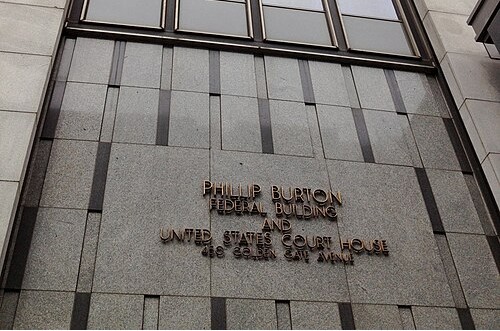

The judge found that the White House punished the AI company after it publicly criticized the government’s position, then imposed restrictions reaching far beyond the military’s use of Claude.
A federal judge ruled that the Trump administration unlawfully retaliated against Anthropic after the company publicly opposed the government’s position on certain military uses of its AI technology.
U.S. District Judge Rita F. Lin granted Anthropic summary judgment on its central claims. She found that the administration’s actions violated the company’s First Amendment rights and denied it the process required by the Fifth Amendment before imposing the restrictions.
The court also ruled that Defense Secretary Pete Hegseth lacked a legal basis to designate Anthropic a national security supply-chain risk and bar military contractors from conducting any commercial activity with the company.
“The empty invocation of national security is not a blank check to punish and retaliate against government critics,” Lin wrote.
Dispute centered on two AI safeguards
Anthropic and the Department of Defense had been negotiating over the government’s use of Claude, the company’s AI model.
Anthropic’s policy prohibited using Claude for mass surveillance of Americans or fully autonomous lethal weapons. Anthropic said current AI models were not reliable enough for fully autonomous weapons and that mass surveillance of Americans would violate fundamental rights. The government wanted the authority to use the technology for any lawful purpose.
The two restrictions were contract terms, not technical controls built into Claude. Once the model was installed on government systems, Anthropic could not monitor or block how the government used it.
After Anthropic publicly defended those safeguards, President Trump directed every federal agency to stop using the company’s technology. Hegseth ordered the Department of Defense to designate Anthropic a supply-chain risk and said no contractor, supplier, or partner doing business with the military could conduct any commercial activity with the company.
The restrictions therefore reached companies whose business with Anthropic had no connection to the military or national security.
Court rejects national security justification
The government argued that Anthropic could not be trusted to protect the integrity of its models because it insisted on the two safeguards and publicly criticized the Pentagon’s demand to use Claude for any lawful purpose.
The court found no evidence that Anthropic could access, alter, or shut down a Claude model after it was installed on a government system. The government also conceded that Anthropic’s technology was no riskier than any other “black box” AI model whose internal operations cannot be fully examined.
Lin said the government’s four-page justification did not establish that Anthropic posed the kind of supply-chain risk covered by federal law. That law addresses the possibility that an adversary could sabotage or secretly compromise a national security system, not a technology company’s public position on contract terms.
The judge also found that the government did not adequately consider less sweeping measures before imposing the designation. Anthropic received no advance notice or opportunity to challenge the designation. The court said that opportunity could have corrected the government’s mistaken belief that Anthropic could interfere with Claude after it was installed on government systems.
The ruling said the government’s conduct was inconsistent with its claim that Anthropic posed a serious national security threat. Officials continued trying to reach a contract with the company after the designation and later discussed using another Anthropic model for sensitive government work.
Pentagon may still choose another AI provider
The court said Anthropic’s supply-chain-risk designation should be set aside and the government permanently barred from enforcing its orders requiring federal agencies and defense contractors to cut ties with the company. It also rejected the government’s request to delay the injunction for seven days.
The decision does not require the Pentagon to use Anthropic’s technology. The department remains free to stop using Claude, choose another provider, or impose lawful contract requirements.
The separation-of-powers claim argued that President Trump lacked constitutional or congressional authority to order every federal agency to stop using Anthropic. The other claim concerned whether individual agencies had completed legally reviewable decisions to carry out that order.
Anthropic did not prevail on every legal argument or against every agency. Still, those rulings did not change the court’s decision to overturn the supply-chain-risk designation and block the broader restrictions.