

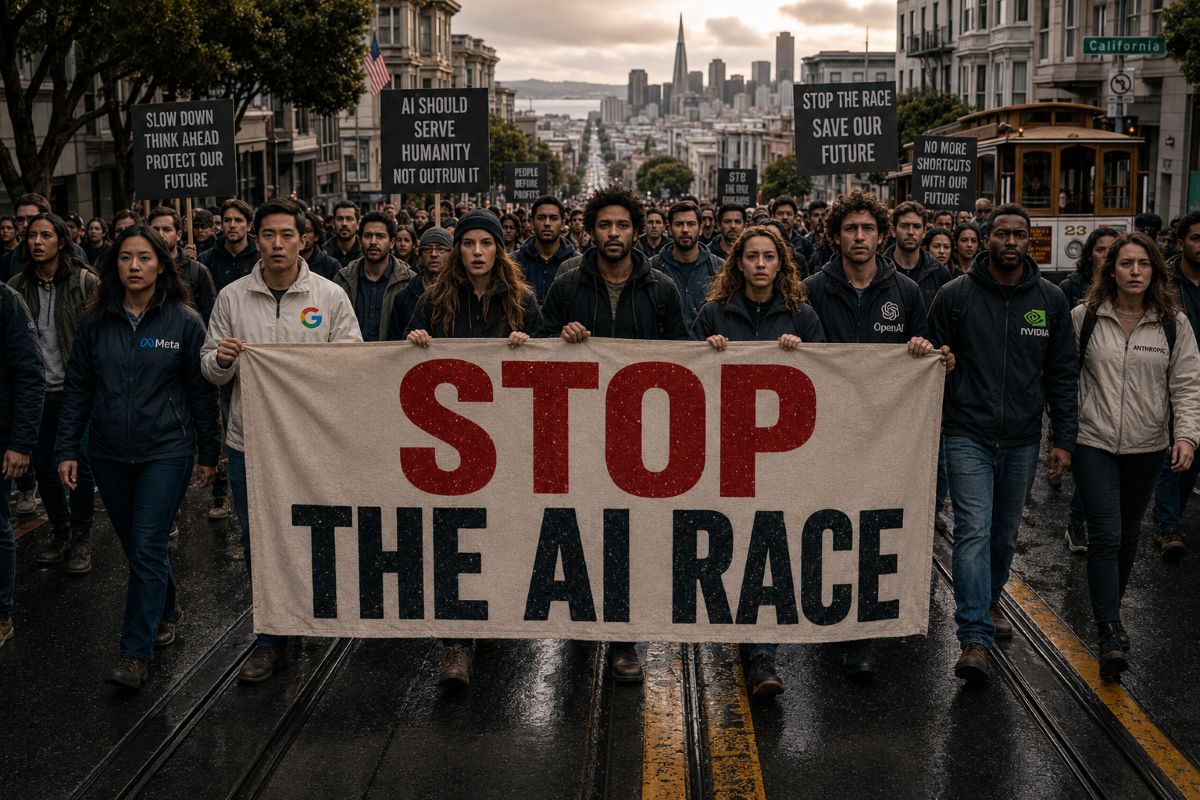

The statement, signed by 1,224 AI company employees, asks Washington to support an international effort that could slow automated AI development if safeguards fall behind.
Leaders and employees from OpenAI, Anthropic, Google, Meta and other AI companies signed a statement asking the U.S. government to support an international effort to prepare ways to slow automated AI development if existing safeguards and oversight cannot keep pace.
The Pacing the Frontier statement does not call for an immediate slowdown. Instead, the signatories want governments to develop the technical rules and coordination needed to make slowing progress an available option.
The statement has 1,224 signatories. They include Anthropic CEO Dario Amodei, OpenAI Chief Scientist Jakub Pachocki, OpenAI Chief Research Officer Mark Chen and other senior researchers and executives.
The Risk of AI Accelerating Its Own Development
The statement focuses on the possibility that AI systems could soon automate more of the research used to develop better AI.
The signatories say it is difficult to predict how quickly that would accelerate AI development. They warn, however, that progress could begin moving faster than people can understand or control increasingly capable systems.
If that happens, AI companies, governments and researchers may need additional time to strengthen safeguards and respond to new risks.
The statement does not identify a specific capability or event that should trigger a slowdown.
Why the Signatories Want International Coordination
The signatories say individual companies and countries face strong competitive pressure to continue developing more powerful AI systems.
A company that slows development on its own could lose ground to competitors. A country could face the same concern if other governments continue supporting faster AI development.
The statement argues that this pressure makes international coordination necessary. It asks the U.S. government to support an effort to create the tools and rules needed to deliberately control the pace of automated AI development across leading AI companies.
The statement remains open for signatures from employees of companies developing the most powerful AI models.
Guidelight AI Standards and Encode AI, two independent nonprofit organizations, provided organizational support for the statement.