


The request calls for a coordinated federal strategy to help state and local governments respond to emerging AI-enabled cyber threats.
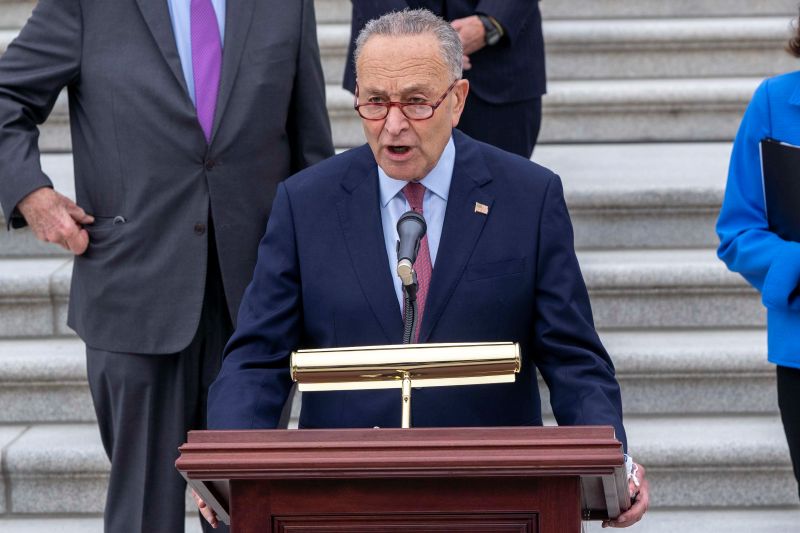
Senator Chuck Schumer (D-NY) sent a letter to the U.S. Department of Homeland Security (DHS), requesting a formal plan to address the cybersecurity risks posed by advanced AI systems to state, local, tribal, and territorial (SLTT) governments.
In the letter, Schumer warned that frontier AI models are rapidly improving their ability to identify software vulnerabilities, potentially affecting critical infrastructure, including hospitals, energy grids, water systems, telecommunications networks, and election systems.
He said both defenders and malicious actors are rushing to use these systems, describing the situation as a “race between cybersecurity defenders and AI-enabled hacking,” with broad availability of such tools anticipated within six to twelve months.
The letter cites recent leaps in AI agent performance from frontier AI models such as Anthropic’s Mythos and OpenAI’s ChatGPT 5.5-Cyber, both of which limited access to their models to advanced cybersecurity testing by vetted partners.
Schumer requested that DHS provide a detailed coordination plan by July 1, 2026. The plan should address how the department will conduct risk assessments, enable real-time information sharing, support rapid vulnerability patching, and provide SLTT governments with access to testing environments and AI talent.
The letter also raises concerns about the suspension of funding for the Multi-State Information Sharing and Analysis Center (MS-ISAC), which has historically managed cyber threat intelligence sharing across state and local governments.