

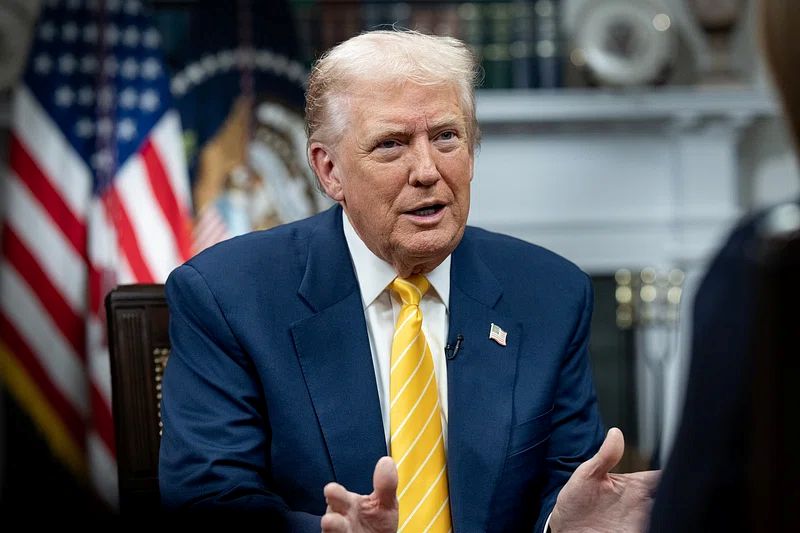

The proposed order would have established a voluntary federal review process for advanced AI models prior to public release. President Trump delayed signing it after objections from advisers and technology executives.
President Donald Trump rejected a planned executive order to create a federal review process for advanced “frontier” AI models before release, delaying a White House signing ceremony previously scheduled with major technology executives.
Trump told reporters at the White House that he postponed the order because “I didn’t like certain aspects of it.” He also said he did not want to slow U.S. progress in AI development while competing with China. According to reports, the President said, “We’re leading China, we’re leading everybody, and I don’t want to do anything that’s going to get in the way of that lead.”
The proposed executive order focused on cybersecurity risks tied to “frontier” AI models, a moniker usually referring to the largest AI companies producing generative and agentic AI tools, such as Anthropic, Google, Microsoft, and OpenAI. The order would have established a voluntary process in which AI developers share new models with the federal government up to 90 days before public release.
According to Axios, the proposal would have placed the Department of the Treasury in charge of overseeing the review process, rather than the traditional technology and cyber-focused agencies, namely, the National Institute of Standards and Technology (NIST) or the Cybersecurity and Infrastructure Security Agency (CISA). The administration reportedly viewed the Treasury as better positioned to coordinate with financial institutions and critical infrastructure operators that could be targets of AI-enabled cyberattacks.
The order also reportedly would have granted early access to key government agencies and critical infrastructure providers to review advanced models before public deployment. Reports did not clarify which companies or infrastructure sectors would have received access. The White House did not say how it would select companies for review or what standards it would use to evaluate models.
Several technology executives and advisers reportedly pushed Trump to reject or revise the order before signing it. Axios and other outlets reported that Elon Musk, Mark Zuckerberg, and former Trump AI adviser David Sacks spoke with Trump shortly before the ceremony was canceled. Some executives reportedly argued that even a voluntary review process could later become mandatory or slow U.S. AI development.
The executive order was born from concerns about the ability of powerful frontier models to discover and exploit cyber threats, as well as a split among Trump supporters.
The White House did not say whether there would be a revised executive order.