

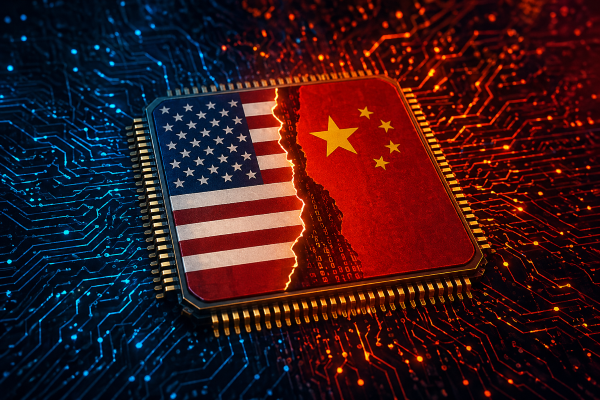

A diplomatic cable directs U.S. officials to warn allies about potential intellectual property theft by Chinese AI companies.
The U.S. State Department launched a global diplomatic effort to warn allied governments about alleged intellectual property (IP) theft by Chinese AI companies, according to a confidential cable first reported by Reuters.
The cable instructs U.S. diplomats to raise concerns with foreign counterparts about Chinese firms, including DeepSeek, Moonshot AI, and MiniMax, and the risk that their systems may be built using U.S. technology without authorization.
The directive focuses on a practice known as “distillation,” where one AI system learns by analyzing the outputs of another. U.S. officials warn that this process can allow companies to replicate advanced models at lower cost while bypassing safeguards built into the original systems.
The diplomatic push follows a White House memorandum outlining similar concerns. The memo, issued by the Office of Science and Technology Policy, states that Chinese actors are engaged in “industrial-scale” efforts to extract capabilities from leading U.S. AI systems.
According to the memo, these efforts may involve large numbers of proxy accounts and technical workarounds designed to access and learn from proprietary models.
U.S. AI companies also raised concerns. OpenAI told U.S. lawmakers in a memorandum that Chinese AI firm DeepSeek was targeting leading U.S. AI companies, including its own models, to replicate their performance and use the outputs to train competing systems.
Anthropic reported similar findings. The company said it detected large-scale efforts by foreign actors to extract capabilities from its Claude models, describing coordinated campaigns that use automated access to learn from its proprietary systems. Anthropic specifically named Chinese firms DeepSeek, Moonshot AI, and MiniMax.
The White House memo further warns that models created through these methods may lack safety protections or controls present in the original systems, raising concerns for businesses and governments that adopt them.
Chinese officials have rejected the allegations. In a statement reported by Reuters, the Chinese Embassy in Washington said the claims are “groundless” and described them as deliberate attacks on China’s technological development.
The dispute comes as competition between the U.S. and China over AI technology intensifies. U.S. officials said they issued the directive to ensure that allied countries understand the potential risks of using AI systems that may rely on unauthorized use of American IP.