

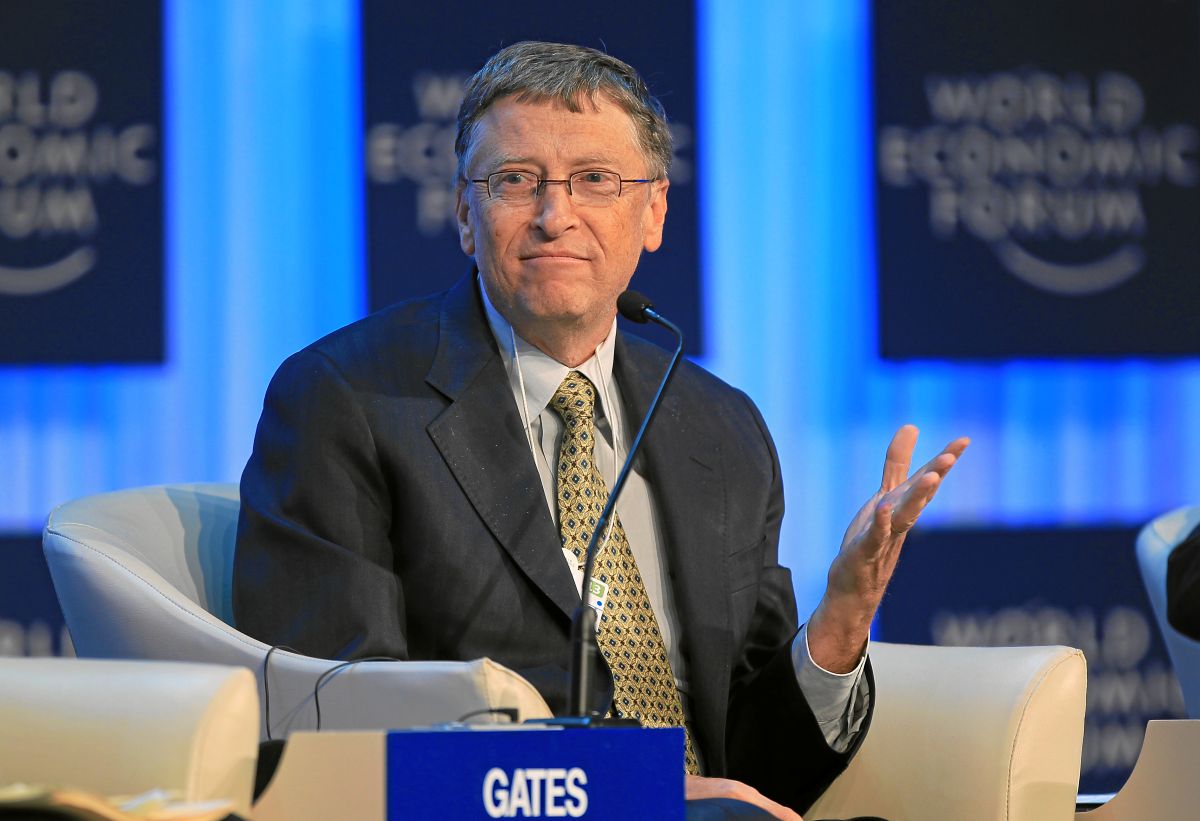

The Microsoft co-founder predicts permanent job losses, increasingly dangerous attacks, and harm to children as AI advances faster than governments can respond.
Microsoft co-founder Bill Gates warned that the world is unprepared for an AI upheaval he expects to transform work, security, and human relationships far faster than earlier technologies.
In a wide-ranging essay, Gates said AI could replace or outperform human thinking across many tasks. He argued that adoption will be unusually fast because AI runs on devices people already use and communicates through ordinary language.
Even under favorable conditions, Gates said the transition could become one of the most turbulent periods in human history. He said leaders, experts, and communities are not preparing adequately.
“There is no plan to ease the entry into the AI era,” Gates wrote.
Gates co-founded Microsoft in 1975 and remains one of the technology industry’s most influential figures. He acknowledged that he still has financial ties to the industry and works with Microsoft and other AI companies through his role as chair of the Gates Foundation. Gates said readers would have to decide whether those connections affect his views.
AI upheaval could eliminate jobs across industries
Gates predicted that many jobs will disappear permanently as AI becomes better at completing work with little or no human review.
He said sales, customer support, software engineering, and paralegal work may be among the first areas affected. He expanded the prediction to include a wider range of tasks that AI could eventually perform, including assessing loan applications, analyzing data, and deciding which patients require urgent care. He added that robots could also begin competing with people in construction and hospitality by the end of the decade.
Gates expects companies to face growing pressure to automate after competitors use AI and robots to reduce their costs. He said entry- and mid-level jobs face the greatest risk, while many new positions will require skills that take years to acquire.
The result could be a lasting decline in employment rather than the temporary job losses associated with an economic downturn, according to Gates.
Gates warns attacks could become easier
Gates’s second major concern is that AI will make it easier for criminals, governments, and other actors to cause harm.
He said AI could lower the cost and skill required to carry out fraud, disinformation, surveillance, and cyberattacks. Hospitals, financial institutions, water systems, power grids, and government benefit systems could all become targets.
The same capabilities that help researchers develop medicines could also make it easier to design biological weapons, Gates warned. He also raised concerns about autonomous weapons, cheaper manipulation of public opinion, and the possibility that increasingly powerful AI systems could eventually act against human interests.
His third concern involves children and human relationships. Gates said AI companions could become addictive, reduce human interaction, and prevent young people from developing social and critical-thinking skills. He acknowledged that the available research remains limited and mixed.
Gates calls for new institutions and taxes
Gates called for new national bodies that could coordinate the work of government agencies. He argued that AI risks cross responsibilities now divided among separate departments and regulators, creating the danger that problems will go unaddressed because no agency considers them its responsibility.
He also proposed an international organization to address risks that cross national borders. Countries that host leading AI developers and control important parts of the technology supply chain should begin establishing shared rules, he said.
Gates also proposed an additional measure meant to keep certain jobs for people. He called the concept “Human Reserved” and said it could apply when automation would displace workers who cannot easily change careers or when human involvement has value beyond technical performance. He cited caregiving, education, mental health care, and delivering serious medical news as possible examples.
Gates also called for taxes on AI tokens and robots. Tokens are the pieces of text that AI systems process when people submit requests and receive responses. He said the taxes could slow job replacement and help pay for retraining and stronger social protections.
He did not call for ending AI development. Gates argued that AI could improve everyday life by making expert knowledge and essential services cheaper and more widely available.
Gates is not alone in expressing global concerns over AI development. In recent months, similar warning statements have come from international organizations such as the United Nations and the Five Eyes (the cyber agencies of Australia, Canada, New Zealand, the United Kingdom, and the United States), individual governments including China, and even frontier AI developers including Anthropic, OpenAI, and Google’s DeepMind.