

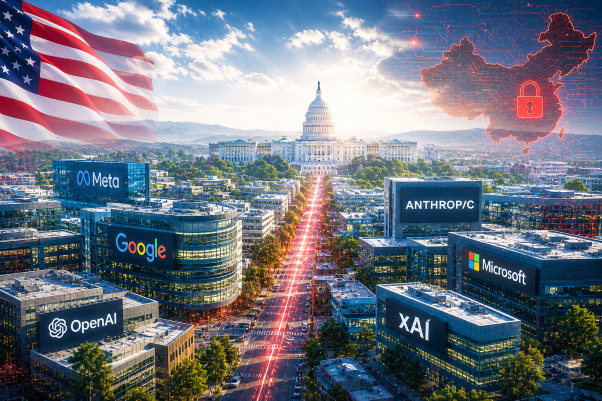

Lawmakers demand details on how leading AI companies secure access to models and detect insider threats linked to China.
U.S. Senators Chuck Grassley (R-Iowa) and Jim Banks (R-Ind.) sent formal letters to nine frontier AI companies, requesting detailed information on how they protect sensitive systems from Chinese espionage. The letters, published by Grassley’s office, were sent to OpenAI, Anthropic, Google, Microsoft, Amazon, Meta, xAI, Safe Superintelligence Inc., and Thinking Machines Lab.
The inquiries focus specifically on insider threats within the company, not external cyber vulnerabilities. Each company was asked to describe how it detects and prevents espionage, manages risks posed by employees with ties to the People’s Republic of China (PRC), secures model weights and related assets (e.g., training data, model architecture and code), and notifies the U.S. government in the event of a breach.
The Senators made specific requests about company practices regarding personnel vetting, privileged access controls, and monitoring practices, including the number of employees with PRC ties who may have access to sensitive AI systems. Companies were given a May 20 deadline to respond.
The move reflects intensifying congressional concern that top-tier frontier AI models are vulnerable not only to hacking but to misuse by company insiders. In the release accompanying the letters, Grassley and Banks cited the Chinese Communist Party’s “extensive track record” of espionage targeting U.S. companies and said protecting AI technology from PRC access is “of paramount importance.”
The letters came on the heels of a recent White House warning that entities “principally based in China” are conducting “industrial-scale” efforts to extract capabilities from U.S. AI systems. According to the memo, these campaigns use techniques including model distillation, large networks of proxy accounts, and jailbreak methods to access proprietary information.
During an April 16, 2026, hearing of the House Select Committee, lawmakers said Chinese firms are advancing their capabilities through a combination of lawful access to global markets and efforts to obtain sensitive U.S. technologies through illicit means.