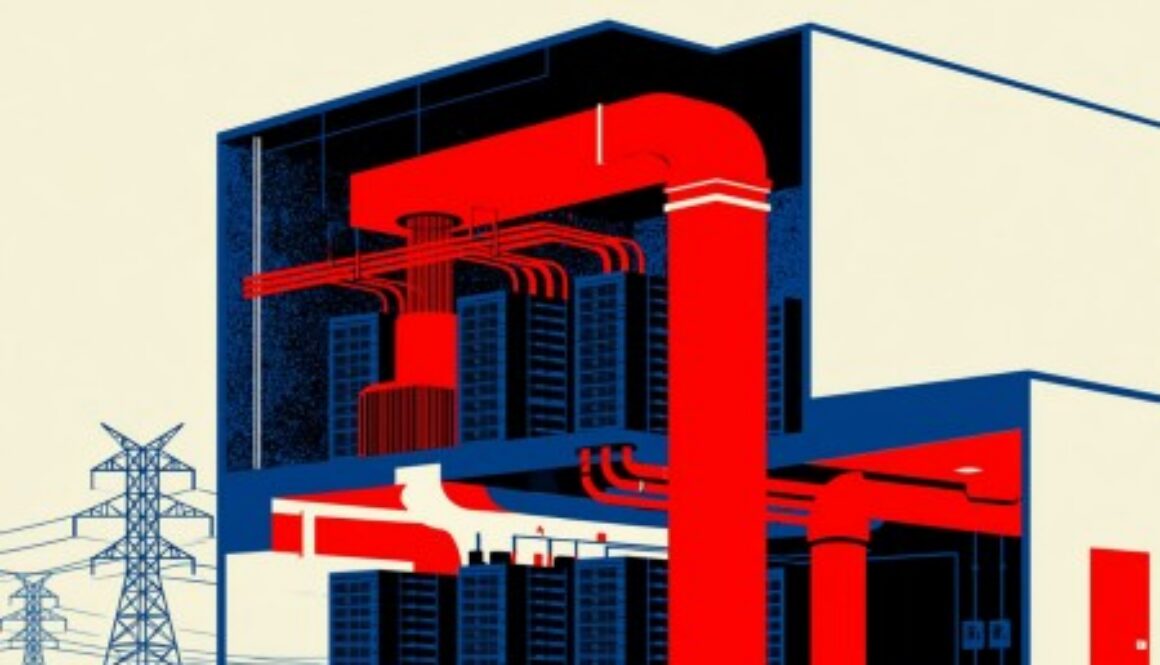

Nvidia, Google, Emerald AI Push Faster Power Access For AI Data Centers
The AI Energy Management Alliance wants utilities and regulators to reward data centers that can reduce electricity use when the grid is strained.
Nvidia, Google, and Emerald AI launched an industry group that wants local utilities to supply electricity to new AI data centers more quickly if they agree to use less power when local demand is highest. The alliance says some new data centers currently wait five to 10 years for utilities to provide enough electricity for them to open.
The AI Energy Management Alliance is proposing industry standards and advocating for changes to government and utility policies. It is not announcing a new rule, and members have not made binding commitments to reduce their electricity use.
Alliance proposes a trade for faster power
AI data centers use large amounts of electricity. When local electricity demand is highest, some utilities may not have enough power to serve new data centers along with existing homes and businesses. Utilities can therefore delay supplying new data centers until more power is available.
The alliance wants utilities to supply electricity to new AI data centers sooner if those data centers agree to use less power during high-demand periods and allow the utilities to confirm the reductions.
A “flexible data center” could reduce its use by postponing some computing work, switching to batteries, or producing some of its own electricity. It would tell the utility in advance how much power it could cut and for how long, and the utility would track whether it followed through.
The alliance has not said how much electricity a data center would have to cut to qualify for faster access.
Study estimates power systems could serve more demand
The alliance cites Duke University research estimating that existing U.S. power systems could serve nearly 100 gigawatts of additional demand if large electricity users agreed to reduce their use during limited periods of high demand.
The estimate does not mean that 100 gigawatts of electricity is currently sitting unused. It represents the additional demand that researchers calculated existing power systems could handle if some large customers temporarily used less electricity when supplies were stretched.
How much additional demand could be served would depend on the location, the available electricity supply, and how much power customers could stop using when asked.
The alliance says those reductions could allow utilities to delay some costly upgrades while providing electricity to new data centers more quickly. The Duke study does not establish that every power system could accommodate more data centers under the same conditions.
Companies have already tested power reductions
The underlying approach is not new, although it is not yet standard across the data center industry.
Google said in March that agreements with several U.S. utilities now allow it to reduce or postpone up to 1 gigawatt of data center electricity use. Google said it can shift selected AI computing tasks when a utility needs to reduce local demand.
A field test published in Nature Energy found that an AI computing system at a commercial data center in Phoenix reduced its electricity use by 25% for three hours without missing its promised performance levels. Emerald AI led the test with Nvidia, Oracle, two Arizona utilities, and the Electric Power Research Institute.
Nvidia and Emerald AI said they tested systems that adjust data center electricity use at five commercial sites. Nvidia said in March that it planned to deploy its DSX Flex software on a larger commercial scale later in 2026 at its AI Factory Research Center in Manassas, Virginia. The software would allow the center to shift computing work when a utility asks it to reduce electricity use.
Alliance includes AI companies, utilities, and power producers
Nvidia, Google, and Emerald AI are the alliance’s founding members. The alliance includes 20 companies and organizations from the AI, data center, utility, and power industries, according to Axios. Participants include Anthropic, AES, National Grid, Constellation Energy, NRG, and RWE.
The organization is a relaunch of the Advanced Energy Management Alliance, formed in 2014 to promote programs that pay large electricity customers to reduce use when needed. The relaunched organization is focused specifically on AI data centers.
The alliance plans to work with its members, including utilities, to decide how data centers’ promised power reductions would be measured and confirmed. It would then ask utilities and regulators to use those rules when deciding which data centers could receive power sooner. The rules would apply only where a utility or regulator chose to adopt them.