
The proposal counts AI agents, robots, and self-driving vehicles as AI, while current rules ban only some AI investments, and only in China.
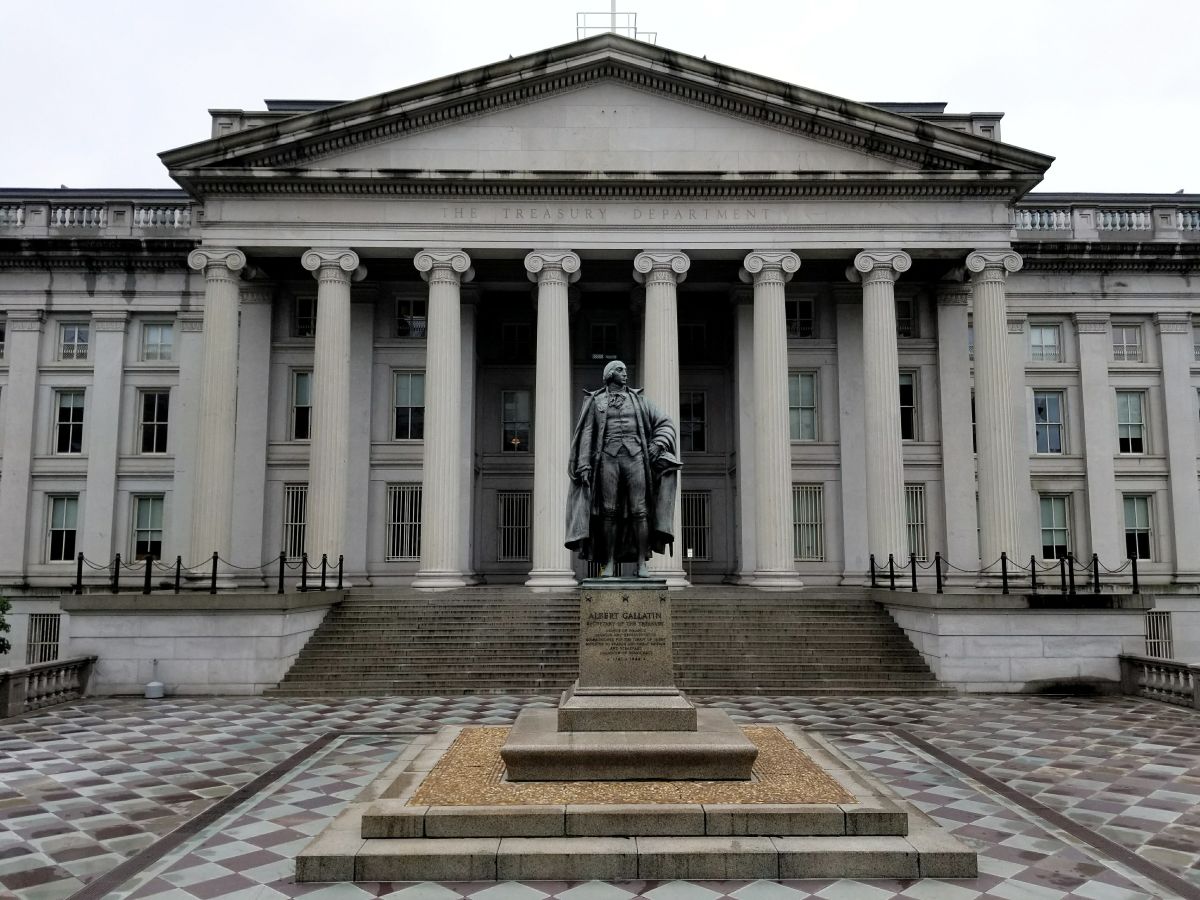
The Treasury Department proposed rules that would ban U.S. investment in any company in China, Russia, Iran, North Korea, or Cuba that develops AI. Current rules cover only China, including Hong Kong and Macau. They ban some AI investments there and require investors to report others.
Treasury’s Office of Investment Security published the proposal on Oct. 26 in the Federal Register, the government’s daily publication of official rules and notices. The ban would take effect only after Treasury issues a final rule. It would not apply to investments made before then, which stay under the current rules.
Since January 2025, Treasury has limited U.S. investment in Chinese technology companies under rules based on a 2023 executive order. In December 2025, Congress passed the Comprehensive Outbound Investment National Security (COINS) Act, which lets Treasury set those limits for more countries and more technologies, including AI. The law leaves Treasury to write rules specifying exactly which investments are banned. This proposal is Treasury’s draft of those rules.
Treasury says computing power no longer shows which AI is most capable
The current rules decide which AI deals are banned, mainly by how much computing power was used to train the AI.
Treasury says that test no longer works. Developers now make models more capable in other ways, such as training them on data generated by other AI.
Treasury also says investors often can’t tell what a foreign company’s AI can do. A model built for general business use may also be able to do military work, even if its developer never checked.
Treasury says a ban on all AI development would be easier for investors to follow, because investors would only need to know whether a company develops AI, not how much computing power it used to train it.
AI agents, robots and self-driving vehicles fall under the ban
Treasury defines AI as any machine-based system that uses data to generate content or to make predictions, recommendations, or decisions. It also includes any software or hardware that uses such a system, including AI agents, robots, self-driving vehicles, and drones. The rule calls all of these “super intelligence systems,” following a Sept. 29 executive order that renamed AI in government documents.
A company that builds on another firm’s AI model would count as developing AI when it adds to what that model can do. Treasury’s example is software that lets a model carry out a series of actions on its own, keep track of its work, and check its reasoning before answering. A company that uses an off-the-shelf model only for its own internal work, including adjusting the model with its own data, would not count as developing AI on that basis alone.
U.S. citizens and companies would be barred from buying shares, forming joint ventures, or investing through overseas funds
U.S. citizens, green-card holders, U.S. companies, and their foreign subsidiaries would be barred from investing in AI developers based in or run from the five countries, and in AI developers anywhere that are 50% or more owned or controlled by entities there.
Covered deals include:
- buying shares, or stakes that can be converted into shares
- loans that give the lender owner-like rights, such as board seats
- joint ventures or new operations in those countries that will develop AI
- stakes in non-U.S. venture capital or private equity funds likely to invest in these companies
Publicly traded stock and small fund stakes would not be covered
The ban would not cover:
- publicly traded stock, or U.S.-registered mutual funds and exchange-traded funds
- commitments of $2 million or less to a venture capital or private equity fund, or fund stakes where the fund has promised in writing not to use the money for banned deals
- bank lending, payment processing and underwriting
- stock that employees receive as pay
U.S. companies that own a subsidiary in one of these countries could still fund its work that doesn’t involve AI. They could also fund AI work the subsidiary was already doing before the rule takes effect, but not new AI work.
Treasury would expand its chip and quantum computing bans and add biotechnology and hypersonic systems
Chips: the proposal would add companies developing or producing high-bandwidth memory, the fast memory used in AI chips.
Quantum computing: it would add companies writing software and algorithms for quantum computers.
The proposal would also ban investment in companies developing biotechnology or hypersonic systems in the named countries.
Violations could cost twice the value of the deal
Treasury could fine a violator up to $250,000 (adjusted annually for inflation) or twice the value of the deal, whichever is greater. It could also force an investor to sell a banned stake.
Treasury is taking comments until Dec. 7
Treasury is asking for comments on the proposal through regulations.gov. Investors who believe a banned deal serves U.S. national interests could ask for an exemption.